Here's a post I wrote for On Wings of Murder, about the origins of Rajah the tiger in Night Kill.
http://murderx5.blogspot.com/2009/07/war-stories-of-big-cat-variety-part-1.html
The contest to win a free copy of NIGHT KILL is extended until September 30. Read the post for rules.
Technorati Tags:
zoo mystery, mystery contest, Night Kill, tiger cut
Tuesday, August 18, 2009


Saturday, August 8, 2009
Hint Fiction
Now back to the writing thread of this blog...
I've been reading about "hint fiction" which is like Twitter, only not so long-winded. Hint fiction is limited to 25 words plus the title. I'm giving a hint fiction contest a whirl. Here's the link if you want to try your luck: http://www.robertswartwood.com/?page_id=8
I've been reading about "hint fiction" which is like Twitter, only not so long-winded. Hint fiction is limited to 25 words plus the title. I'm giving a hint fiction contest a whirl. Here's the link if you want to try your luck: http://www.robertswartwood.com/?page_id=8
Monday, August 3, 2009
Zoos then and now
Hey, I'm a guest blogger on On Wings of Murder! But a glitch in the process meant I wasn't notified when the posts went up, so I'm repeating them here. Be sure to catch the contest!
Maybe there’s an occupation or a work scene that doesn’t change over the decades, but zoos aren’t it. My zookeeper years straddled the mid 1970s to the late 1980s. With NIGHT KILL, the first of the Iris Oakley “zoodunnits”, set in current time, I knew I would have one foot in the zoo world I worked in for twelve years and the other in the world of today’s zoos. I made sure that fictional Finley Memorial Zoo, where Iris works, is small and poor and thus a lot more like the old zoos I knew. But to be fair to modern zoos (and because it’s fun), little Finley Zoo got a bond measure passed and is upgrading as fast as it can go.
When I started at what is now called the Oregon Zoo, farm and circus methods of handling animals influenced how zoos managed animals. Zookeeping was almost exclusively a male profession. The older exhibits were designed primarily for safety and cleanliness. Zoos focused on breeding animals because taking them from the wild was no longer acceptable. Zoo staff and anyone else paying attention to the natural world were deeply concerned about dwindling wild populations of many species, especially in Africa and Asia.
Some of this has changed, some has not.
 Bronx zoo tiger training
Modern training methods are a wonderful tool for moving animals to where you want them and for getting them to tolerate examinations and medical treatments. I left the zoo world when these techniques were just starting to be adopted, and I’m sorry I missed this huge shift. What B.F. Skinner started, the marine mammals trainers and others developed until today we can interact with wild animals in ways that that are calm, cooperative, and mutually beneficial.
 Harbor seal trained for weighing.
Training requires skill and time, but it has taken much of the drama out of animal handling. Force and fear-based methods now must be justified by unpredictable emergencies. Otherwise, they are mostly failures to train properly.
At the same time as “husbandry training” was adopted, zookeeping shifted from almost entirely men to over fifty percent women. As a result, keepers and their managers redesigned jobs to require less muscle and to accommodate pregnancy and nursing. I suspect issues still remain, but it’s not a matter of breaking trail any more. I need to add that the male zookeepers at Oregon Zoo were very supportive of me as I participated in that transition.
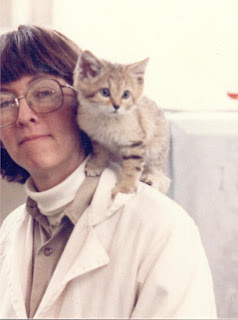 Ann, Back in the day with Sand Cat
Back in the day, I weighed 112 pounds and compounded my physical inadequacies by two pregnancies. None of the men gave me a hard time for not being up to the job. Their tolerance was only partly because some of them couldn’t toss heavy bales off the hay truck either, due to allergies. We figured out how to get the work done safely and equitably.
 Gorilla exhibit at Bronx Zoo.
Today, zoo exhibits are still designed for safety and ease of cleaning, but many other design requirements come into play. It’s assumed that animals must have the opportunity to behave the way they would in the wild, as much as possible. Pigs like to dig—they need dirt or sand. Gibbons live high in the treetops—they need tall, long exhibits for brachiating. Plus, the housing should offer opportunities to show visitors what the natural environment looks like and signs to explain why particular animals choose to live there. Bigger exhibits may or may not be better, but more complex seems to suit a lot of creatures. Ponds, sand pits, trees to climb on… take a look next time you are at the zoo and see what’s been provided. And please forgive the trashy-looking buckets, balls, and cardboard boxes in the exhibits. Keepers want to see animals mentally and physically stimulated and it’s not easy to come up with safe toys. Sometimes esthetics suffer.
As for breeding, I was there at the right time. Babies were welcomed almost universally. Mandrill monkeys, chimpanzees, elephants, and other animals seemed engaged, busy, and relaxed when they had babies to raise. Abnormal behaviors dropped out as parents focused on their young. The public loved it and so did the staff. Today, it’s not so loose. Stud books and Species Survival Plans ensure that only unrelated animals are bred, so that genetic diversity is maximized. Other factors restricting breeding are the availability of good zoo homes for the offspring and keeping a good age mix. Keepers use great creativity in finding other ways to keep their charges occupied.
Concerns about the status of animals in the wild has changed since my zoo days—it’s gotten worse. The situation for a long list of creatures is increasingly dire as humans consume more and more of the earth’s resources. We aren’t leaving much for our companions on this little planet. Whether zoos are doing all they can to turn this around is hotly debated, both within and outside of the zoo world. It’s a good discussion to have, but keep in mind that zoos are trivial endeavors compared to other human activities that affect wildlife.
I hope this little bit of history helps you enjoy your next zoo visit. Slow down, spend an extra minute or two at each exhibit. Every animal has its story, its personality, its routine. See how much you can catch.
Drop me a comment about your favorite zoo experience.


When I started at what is now called the Oregon Zoo, farm and circus methods of handling animals influenced how zoos managed animals. Zookeeping was almost exclusively a male profession. The older exhibits were designed primarily for safety and cleanliness. Zoos focused on breeding animals because taking them from the wild was no longer acceptable. Zoo staff and anyone else paying attention to the natural world were deeply concerned about dwindling wild populations of many species, especially in Africa and Asia.
Some of this has changed, some has not.
 Bronx zoo tiger training
Modern training methods are a wonderful tool for moving animals to where you want them and for getting them to tolerate examinations and medical treatments. I left the zoo world when these techniques were just starting to be adopted, and I’m sorry I missed this huge shift. What B.F. Skinner started, the marine mammals trainers and others developed until today we can interact with wild animals in ways that that are calm, cooperative, and mutually beneficial.
 Harbor seal trained for weighing.
Training requires skill and time, but it has taken much of the drama out of animal handling. Force and fear-based methods now must be justified by unpredictable emergencies. Otherwise, they are mostly failures to train properly.
At the same time as “husbandry training” was adopted, zookeeping shifted from almost entirely men to over fifty percent women. As a result, keepers and their managers redesigned jobs to require less muscle and to accommodate pregnancy and nursing. I suspect issues still remain, but it’s not a matter of breaking trail any more. I need to add that the male zookeepers at Oregon Zoo were very supportive of me as I participated in that transition.
 Ann, Back in the day with Sand Cat
Back in the day, I weighed 112 pounds and compounded my physical inadequacies by two pregnancies. None of the men gave me a hard time for not being up to the job. Their tolerance was only partly because some of them couldn’t toss heavy bales off the hay truck either, due to allergies. We figured out how to get the work done safely and equitably.
 Gorilla exhibit at Bronx Zoo.
Today, zoo exhibits are still designed for safety and ease of cleaning, but many other design requirements come into play. It’s assumed that animals must have the opportunity to behave the way they would in the wild, as much as possible. Pigs like to dig—they need dirt or sand. Gibbons live high in the treetops—they need tall, long exhibits for brachiating. Plus, the housing should offer opportunities to show visitors what the natural environment looks like and signs to explain why particular animals choose to live there. Bigger exhibits may or may not be better, but more complex seems to suit a lot of creatures. Ponds, sand pits, trees to climb on… take a look next time you are at the zoo and see what’s been provided. And please forgive the trashy-looking buckets, balls, and cardboard boxes in the exhibits. Keepers want to see animals mentally and physically stimulated and it’s not easy to come up with safe toys. Sometimes esthetics suffer.
As for breeding, I was there at the right time. Babies were welcomed almost universally. Mandrill monkeys, chimpanzees, elephants, and other animals seemed engaged, busy, and relaxed when they had babies to raise. Abnormal behaviors dropped out as parents focused on their young. The public loved it and so did the staff. Today, it’s not so loose. Stud books and Species Survival Plans ensure that only unrelated animals are bred, so that genetic diversity is maximized. Other factors restricting breeding are the availability of good zoo homes for the offspring and keeping a good age mix. Keepers use great creativity in finding other ways to keep their charges occupied.
Concerns about the status of animals in the wild has changed since my zoo days—it’s gotten worse. The situation for a long list of creatures is increasingly dire as humans consume more and more of the earth’s resources. We aren’t leaving much for our companions on this little planet. Whether zoos are doing all they can to turn this around is hotly debated, both within and outside of the zoo world. It’s a good discussion to have, but keep in mind that zoos are trivial endeavors compared to other human activities that affect wildlife.
I hope this little bit of history helps you enjoy your next zoo visit. Slow down, spend an extra minute or two at each exhibit. Every animal has its story, its personality, its routine. See how much you can catch.
Drop me a comment about your favorite zoo experience.
Enter the Zoo Contest to win a free copy of NIGHT KILL!
Send me an email with Contest in the subject line. In the body of the email, tell me your favorite wild animal and the reason why. Entries will be entered into a random drawing. Contest closes August 27, 2009. The email address is 
Thursday, July 23, 2009
What's new?
It's high time to break radio silence and provide a little update on my recent activities. Mostly I've been pedal-to-the-metal on zoo-dunnit #2 of the Iris Oakely series. This sequel to Night Kill is tentatively titled Did Not Survive, DNS to its friends. This mystery features elephants and the issues around their captive management, as well as a little bit about management of wild elephants. The previous mystery #2, focused on orangutans, is now in #3 position due to tedious circumstances which I will spare you. So, yes, folks, I've been outlining and drafting and revising my little heart out.
But I haven't been too busy to visit a few zoos. Here's an Eagle Owl from Oregon Zoo.

And here's a picture of Samudra, "our" baby elephant. Notice that Mom (Rose-Tu) is picking up his foot. She did that several times. Perhaps she has her own training program for her little guy and the keepers' training is just a supplement? Here's more information about Sam and his progress: http://www.oregonzoo.org/Samudra/index.htm

Enough fun with pictures! Back to the wonderful world of revisions.
Technorati Tags:Samudra, Oregon Zoo, Night Kill, elephant, zoo-dunnit
But I haven't been too busy to visit a few zoos. Here's an Eagle Owl from Oregon Zoo.
And here's a picture of Samudra, "our" baby elephant. Notice that Mom (Rose-Tu) is picking up his foot. She did that several times. Perhaps she has her own training program for her little guy and the keepers' training is just a supplement? Here's more information about Sam and his progress: http://www.oregonzoo.org/Samudra/index.htm
Enough fun with pictures! Back to the wonderful world of revisions.
Technorati Tags:Samudra, Oregon Zoo, Night Kill, elephant, zoo-dunnit
Tuesday, March 10, 2009
Renewal, durability, adaptation
It's a late spring this year here in Portland, Oregon. We had sleet yesterday and expect frost again tonight. Nonetheless, green tips are poking up and now and then a song sparrow gets ahead of himself and hollers for love and territory. It's hard to be optimistic during our cold gray winters, easier now that the days are longer. I'm moved to show you a poem of hope, about how our fellow denizens can sometimes find ways to live with us without our encouragement or even awareness.
Let me know what you think.
ACCOMMODATION
Rabbits gone now, coyotes batten on dachshunds and cats
Nurtured in houses colonizing scalped hills.
How to explain these night nests of peculiar apes,
Proliferating absurdly, linked by hard black trails?
Inexplicable fauna, we trot down into gaping crevices
Where shrieking boxes halt and accept us.
Below the grimy platform, safe beside the third rail,
Flit grimy mice, salvaging hot dog scraps.
Twenty years ago Chernobyl slipped in our hand
And, bloodied, we dropped it and left.
Now black storks clack in the young forest
And half-poisoned wolves play with their cubs.
Monday, February 16, 2009
Podcast--The Apprentice Assassin
A radio station in Northampton, Mass., broadcast a short story of mine today. No zoo or animals in this one. Instead, it's from my "women victorious" series of wish fulfillments.
Take a listen if you wish: http://tinyurl.com/cct8on
Take a listen if you wish: http://tinyurl.com/cct8on
Sunday, February 15, 2009
A fortress for native wildlife


I blogged about New Zealand last time and I'd like to add a bit more before moving on. I've lived almost my entire life in the American West and I've been a conservationist/ environmentalist/ dirt-worshiping tree-hugger pretty much since middle school, which was a long time ago. Here in the western US, the modern history of the interaction between humans and wildlife has "predator control" as a major theme. In A Sand County Almanac, Aldo Leopold talks about our success in extirpating wolves from the west with traps, poison, and shooting. We tried, and still try, to do that with coyotes, but they are far better at surviving our efforts. The consequences of our war on canid and other predators includes poisoned domestic animals, non-target wild animals, and humans. Livestock may benefit, but native grazers and browsers such as deer and elk do not necessarily benefit. In addition, fur bearing predators are trapped for market. Many consider leg-hold traps to be inhumane. All in all, your average wildlife advocate in the US is not likely to be a fan of either poisons or traps.
Not so in New Zealand. Major attitude adjustment required! New Zealand was devoid of mammals until we got there. OK, there were two species of bats and a seal, but that was about it until people deposited rats, cats, weasels, stoats, more rats, deer, chamois (!), goats, pigs, and on and on. The consequences to the native birds, who were often ground-nesters and otherwise inadequate to the challenge, are all too predictable. (Some of the native birds seem to fly like bricks--great hearty flapping turns out to be a jay-sized tui or saddleback, not the wounded condor it sounds like.)
So let's say you want to set up reserves for native wildlife, which, bless their enlightened hearts, those New Zealanders have done. The requirements are that you have some habitat (see previous blog) and that you get rid of the introduced predators. The photo at the top of this post shows the incredible fence at Kaori Sanctuary near Wellington. It is designed to keep out mammals as small as juvenile mice, burrowing pigs, jumping deer, climbing cats, and everything else. The reserve is encircled by this fence (you can see it on Google Earth). That is Step 1 and now here we are at Step 2, traps and poisons. Once the space inside the fence is cleansed of mammals, then tuatara, saddlebacks, and other wildlife can be released with a reasonable hope of survival. But it doesn't end there. The price of survival is eternal vigilance. A staff person said that if the fence is breached (such as a tree falling on it), the likelihood of a predator (feral house cat, rat, stoat) entering the sanctuary is about 80-90% in 24 hours. That is some pressure. So the staff have little boxes everywhere with bait in them to collect tracks. That way, they can tell what's gotten in and deal with it.
Mt Arthur on the South Island isn't fenced. I stood in one spot and rotated, taking pictures of different kinds of traps for different kinds of mammals. The reward for all this control was two wekas wandering around the trails, among a lot of other very cool birds.


Our relatives have kiwis on their property, far north on the North Island. The local trapper/poisoner keeps the Brush-tailed possum population low so that tree ferns and kiwis can survive.
I'm still getting adjusted to two realities: that wildlife can depend so utterly on our efforts and that our least-liked tools may be essential for the job.
Your thoughts? I would especially love to hear comments from people who know more about New Zealand conservation than I do.
Technorati Tags:
New Zealand conservation, Kaori Sanctuary, Mt. Arthur, predator control
Subscribe to:
Posts (Atom)


 Posts


