I'm back from the AAZK/ICZ conference in Seattle. That would be American Association of Zoo Keepers and International Congress on Zookeeping, 400 attendees in all. I met people from England (breakfast with the director of Chester Zoo!), The Philippines, India, New Zealand, Australia, and several other countries as well. We heard a boatload of presentations on animal husbandry, as you might expect, but also many on conservation. The International Rhino Foundation and Lewa Rhino Sanctuary were especially impressive. Take a look and send them money. They will use it to keep rhinos alive, not an easy task with poaching at a 15 year high.
Writers love language and I love professional jargon. Here's a few terms used in this profession.
Enrichment (noun): Has nothing to do with money. It refers to enhancing an animal's environment through various kinds of stimuli--entertainment, if you will. This can include training, toys, food treats, smells, social opportunities, and so on. Avoids boredom, encourages natural behavior, stimulates exercise.
Jackpotting (verb): A training technique. When the animal does something brilliant (that the trainer approves of!), the trainer jackpots the animal--a big ol' reward, more than the usual treat.
Howdy (verb or adjective): The process of introducing animals through mesh, for example, putting a new monkey into a "howdy cage" inside the exhibit. Everybody gets to sniff and see each other, nobody gets hurt. Once everyone calms down about the whole idea of a newbie, the new animal is released into the enclosure, with less chance of aggression from the residents. Other usage: "We howdied her for two weeks and then the introduction went fine."
Camera trap: A motion-sensitive camera used to find out what's out there in the wild. We saw the classic video: a rhino in a swamp with her half-grown kid. Mom hears the camera. Sniffs, listens, sniffs, thinks very hard, and then does what rhinos do. Blam! Cut to gray.
Last tidbit for this post--a couple of guys with AAZK tee shirts. On the back, the slogan "If I die before I wake, feed me out." You can interpret that on your own...
Tuesday, September 29, 2009


Thursday, September 10, 2009
Voices, I hear voices...
Here's another blog I wrote for On Wings of Murder about choosing the voice for a story, why the Iris Oakley zoo-dunnits are in first person. Enjoy!
http://murderx5.blogspot.com/2009/07/inside-head-of-zookeeper.html
Technorati Tags:
zoo mystery, zoo dunnit, mystery, voice
http://murderx5.blogspot.com/2009/07/inside-head-of-zookeeper.html
Technorati Tags:
zoo mystery, zoo dunnit, mystery, voice
Wednesday, September 2, 2009
War Stories of the Big Cat Variety: Part 2
Here's Part 2 of my guest blog for On Wings of Murder about raising a lion and tiger cub.
(Contest is open until September 30.)
http://murderx5.blogspot.com/2009/07/war-stories-of-big-cat-variety-part-2.html
Technorati Tags:
lion cub, tiger cub, zookeeper, zoo keeper, Night Kill
(Contest is open until September 30.)
http://murderx5.blogspot.com/2009/07/war-stories-of-big-cat-variety-part-2.html
Technorati Tags:
lion cub, tiger cub, zookeeper, zoo keeper, Night Kill
Tuesday, August 18, 2009
War Stories of the Big Cat Variety: Part 1
Here's a post I wrote for On Wings of Murder, about the origins of Rajah the tiger in Night Kill.
http://murderx5.blogspot.com/2009/07/war-stories-of-big-cat-variety-part-1.html
The contest to win a free copy of NIGHT KILL is extended until September 30. Read the post for rules.
Technorati Tags:
zoo mystery, mystery contest, Night Kill, tiger cut
http://murderx5.blogspot.com/2009/07/war-stories-of-big-cat-variety-part-1.html
The contest to win a free copy of NIGHT KILL is extended until September 30. Read the post for rules.
Technorati Tags:
zoo mystery, mystery contest, Night Kill, tiger cut
Saturday, August 8, 2009
Hint Fiction
Now back to the writing thread of this blog...
I've been reading about "hint fiction" which is like Twitter, only not so long-winded. Hint fiction is limited to 25 words plus the title. I'm giving a hint fiction contest a whirl. Here's the link if you want to try your luck: http://www.robertswartwood.com/?page_id=8
I've been reading about "hint fiction" which is like Twitter, only not so long-winded. Hint fiction is limited to 25 words plus the title. I'm giving a hint fiction contest a whirl. Here's the link if you want to try your luck: http://www.robertswartwood.com/?page_id=8
Monday, August 3, 2009
Zoos then and now
Hey, I'm a guest blogger on On Wings of Murder! But a glitch in the process meant I wasn't notified when the posts went up, so I'm repeating them here. Be sure to catch the contest!
Maybe there’s an occupation or a work scene that doesn’t change over the decades, but zoos aren’t it. My zookeeper years straddled the mid 1970s to the late 1980s. With NIGHT KILL, the first of the Iris Oakley “zoodunnits”, set in current time, I knew I would have one foot in the zoo world I worked in for twelve years and the other in the world of today’s zoos. I made sure that fictional Finley Memorial Zoo, where Iris works, is small and poor and thus a lot more like the old zoos I knew. But to be fair to modern zoos (and because it’s fun), little Finley Zoo got a bond measure passed and is upgrading as fast as it can go.
When I started at what is now called the Oregon Zoo, farm and circus methods of handling animals influenced how zoos managed animals. Zookeeping was almost exclusively a male profession. The older exhibits were designed primarily for safety and cleanliness. Zoos focused on breeding animals because taking them from the wild was no longer acceptable. Zoo staff and anyone else paying attention to the natural world were deeply concerned about dwindling wild populations of many species, especially in Africa and Asia.
Some of this has changed, some has not.
 Bronx zoo tiger training
Modern training methods are a wonderful tool for moving animals to where you want them and for getting them to tolerate examinations and medical treatments. I left the zoo world when these techniques were just starting to be adopted, and I’m sorry I missed this huge shift. What B.F. Skinner started, the marine mammals trainers and others developed until today we can interact with wild animals in ways that that are calm, cooperative, and mutually beneficial.
 Harbor seal trained for weighing.
Training requires skill and time, but it has taken much of the drama out of animal handling. Force and fear-based methods now must be justified by unpredictable emergencies. Otherwise, they are mostly failures to train properly.
At the same time as “husbandry training” was adopted, zookeeping shifted from almost entirely men to over fifty percent women. As a result, keepers and their managers redesigned jobs to require less muscle and to accommodate pregnancy and nursing. I suspect issues still remain, but it’s not a matter of breaking trail any more. I need to add that the male zookeepers at Oregon Zoo were very supportive of me as I participated in that transition.
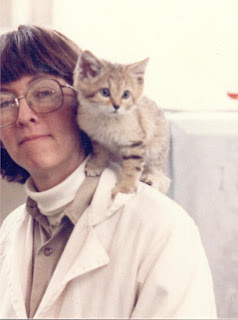 Ann, Back in the day with Sand Cat
Back in the day, I weighed 112 pounds and compounded my physical inadequacies by two pregnancies. None of the men gave me a hard time for not being up to the job. Their tolerance was only partly because some of them couldn’t toss heavy bales off the hay truck either, due to allergies. We figured out how to get the work done safely and equitably.
 Gorilla exhibit at Bronx Zoo.
Today, zoo exhibits are still designed for safety and ease of cleaning, but many other design requirements come into play. It’s assumed that animals must have the opportunity to behave the way they would in the wild, as much as possible. Pigs like to dig—they need dirt or sand. Gibbons live high in the treetops—they need tall, long exhibits for brachiating. Plus, the housing should offer opportunities to show visitors what the natural environment looks like and signs to explain why particular animals choose to live there. Bigger exhibits may or may not be better, but more complex seems to suit a lot of creatures. Ponds, sand pits, trees to climb on… take a look next time you are at the zoo and see what’s been provided. And please forgive the trashy-looking buckets, balls, and cardboard boxes in the exhibits. Keepers want to see animals mentally and physically stimulated and it’s not easy to come up with safe toys. Sometimes esthetics suffer.
As for breeding, I was there at the right time. Babies were welcomed almost universally. Mandrill monkeys, chimpanzees, elephants, and other animals seemed engaged, busy, and relaxed when they had babies to raise. Abnormal behaviors dropped out as parents focused on their young. The public loved it and so did the staff. Today, it’s not so loose. Stud books and Species Survival Plans ensure that only unrelated animals are bred, so that genetic diversity is maximized. Other factors restricting breeding are the availability of good zoo homes for the offspring and keeping a good age mix. Keepers use great creativity in finding other ways to keep their charges occupied.
Concerns about the status of animals in the wild has changed since my zoo days—it’s gotten worse. The situation for a long list of creatures is increasingly dire as humans consume more and more of the earth’s resources. We aren’t leaving much for our companions on this little planet. Whether zoos are doing all they can to turn this around is hotly debated, both within and outside of the zoo world. It’s a good discussion to have, but keep in mind that zoos are trivial endeavors compared to other human activities that affect wildlife.
I hope this little bit of history helps you enjoy your next zoo visit. Slow down, spend an extra minute or two at each exhibit. Every animal has its story, its personality, its routine. See how much you can catch.
Drop me a comment about your favorite zoo experience.


When I started at what is now called the Oregon Zoo, farm and circus methods of handling animals influenced how zoos managed animals. Zookeeping was almost exclusively a male profession. The older exhibits were designed primarily for safety and cleanliness. Zoos focused on breeding animals because taking them from the wild was no longer acceptable. Zoo staff and anyone else paying attention to the natural world were deeply concerned about dwindling wild populations of many species, especially in Africa and Asia.
Some of this has changed, some has not.
 Bronx zoo tiger training
Modern training methods are a wonderful tool for moving animals to where you want them and for getting them to tolerate examinations and medical treatments. I left the zoo world when these techniques were just starting to be adopted, and I’m sorry I missed this huge shift. What B.F. Skinner started, the marine mammals trainers and others developed until today we can interact with wild animals in ways that that are calm, cooperative, and mutually beneficial.
 Harbor seal trained for weighing.
Training requires skill and time, but it has taken much of the drama out of animal handling. Force and fear-based methods now must be justified by unpredictable emergencies. Otherwise, they are mostly failures to train properly.
At the same time as “husbandry training” was adopted, zookeeping shifted from almost entirely men to over fifty percent women. As a result, keepers and their managers redesigned jobs to require less muscle and to accommodate pregnancy and nursing. I suspect issues still remain, but it’s not a matter of breaking trail any more. I need to add that the male zookeepers at Oregon Zoo were very supportive of me as I participated in that transition.
 Ann, Back in the day with Sand Cat
Back in the day, I weighed 112 pounds and compounded my physical inadequacies by two pregnancies. None of the men gave me a hard time for not being up to the job. Their tolerance was only partly because some of them couldn’t toss heavy bales off the hay truck either, due to allergies. We figured out how to get the work done safely and equitably.
 Gorilla exhibit at Bronx Zoo.
Today, zoo exhibits are still designed for safety and ease of cleaning, but many other design requirements come into play. It’s assumed that animals must have the opportunity to behave the way they would in the wild, as much as possible. Pigs like to dig—they need dirt or sand. Gibbons live high in the treetops—they need tall, long exhibits for brachiating. Plus, the housing should offer opportunities to show visitors what the natural environment looks like and signs to explain why particular animals choose to live there. Bigger exhibits may or may not be better, but more complex seems to suit a lot of creatures. Ponds, sand pits, trees to climb on… take a look next time you are at the zoo and see what’s been provided. And please forgive the trashy-looking buckets, balls, and cardboard boxes in the exhibits. Keepers want to see animals mentally and physically stimulated and it’s not easy to come up with safe toys. Sometimes esthetics suffer.
As for breeding, I was there at the right time. Babies were welcomed almost universally. Mandrill monkeys, chimpanzees, elephants, and other animals seemed engaged, busy, and relaxed when they had babies to raise. Abnormal behaviors dropped out as parents focused on their young. The public loved it and so did the staff. Today, it’s not so loose. Stud books and Species Survival Plans ensure that only unrelated animals are bred, so that genetic diversity is maximized. Other factors restricting breeding are the availability of good zoo homes for the offspring and keeping a good age mix. Keepers use great creativity in finding other ways to keep their charges occupied.
Concerns about the status of animals in the wild has changed since my zoo days—it’s gotten worse. The situation for a long list of creatures is increasingly dire as humans consume more and more of the earth’s resources. We aren’t leaving much for our companions on this little planet. Whether zoos are doing all they can to turn this around is hotly debated, both within and outside of the zoo world. It’s a good discussion to have, but keep in mind that zoos are trivial endeavors compared to other human activities that affect wildlife.
I hope this little bit of history helps you enjoy your next zoo visit. Slow down, spend an extra minute or two at each exhibit. Every animal has its story, its personality, its routine. See how much you can catch.
Drop me a comment about your favorite zoo experience.
Enter the Zoo Contest to win a free copy of NIGHT KILL!
Send me an email with Contest in the subject line. In the body of the email, tell me your favorite wild animal and the reason why. Entries will be entered into a random drawing. Contest closes August 27, 2009. The email address is 
Thursday, July 23, 2009
What's new?
It's high time to break radio silence and provide a little update on my recent activities. Mostly I've been pedal-to-the-metal on zoo-dunnit #2 of the Iris Oakely series. This sequel to Night Kill is tentatively titled Did Not Survive, DNS to its friends. This mystery features elephants and the issues around their captive management, as well as a little bit about management of wild elephants. The previous mystery #2, focused on orangutans, is now in #3 position due to tedious circumstances which I will spare you. So, yes, folks, I've been outlining and drafting and revising my little heart out.
But I haven't been too busy to visit a few zoos. Here's an Eagle Owl from Oregon Zoo.

And here's a picture of Samudra, "our" baby elephant. Notice that Mom (Rose-Tu) is picking up his foot. She did that several times. Perhaps she has her own training program for her little guy and the keepers' training is just a supplement? Here's more information about Sam and his progress: http://www.oregonzoo.org/Samudra/index.htm

Enough fun with pictures! Back to the wonderful world of revisions.
Technorati Tags:Samudra, Oregon Zoo, Night Kill, elephant, zoo-dunnit
But I haven't been too busy to visit a few zoos. Here's an Eagle Owl from Oregon Zoo.
And here's a picture of Samudra, "our" baby elephant. Notice that Mom (Rose-Tu) is picking up his foot. She did that several times. Perhaps she has her own training program for her little guy and the keepers' training is just a supplement? Here's more information about Sam and his progress: http://www.oregonzoo.org/Samudra/index.htm
Enough fun with pictures! Back to the wonderful world of revisions.
Technorati Tags:Samudra, Oregon Zoo, Night Kill, elephant, zoo-dunnit
Subscribe to:
Posts (Atom)


 Posts


